Two ways of fixing a crown
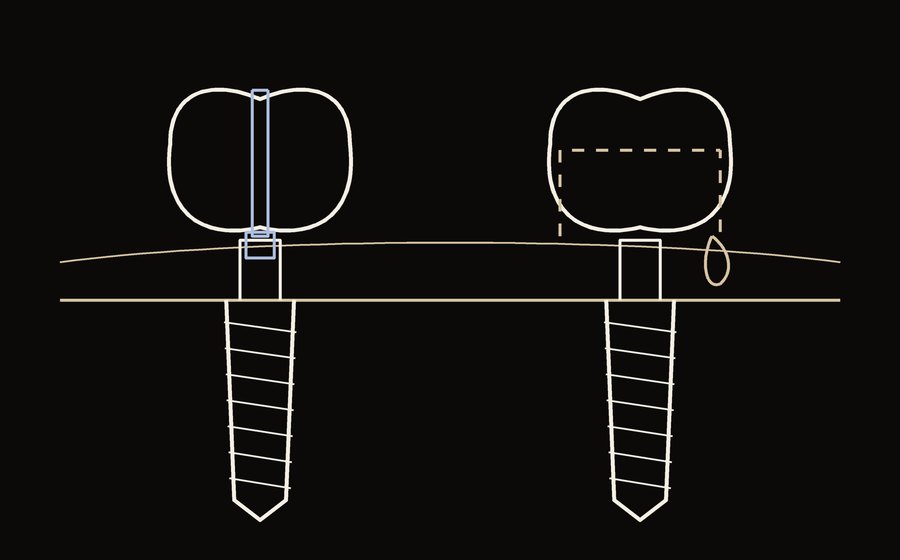
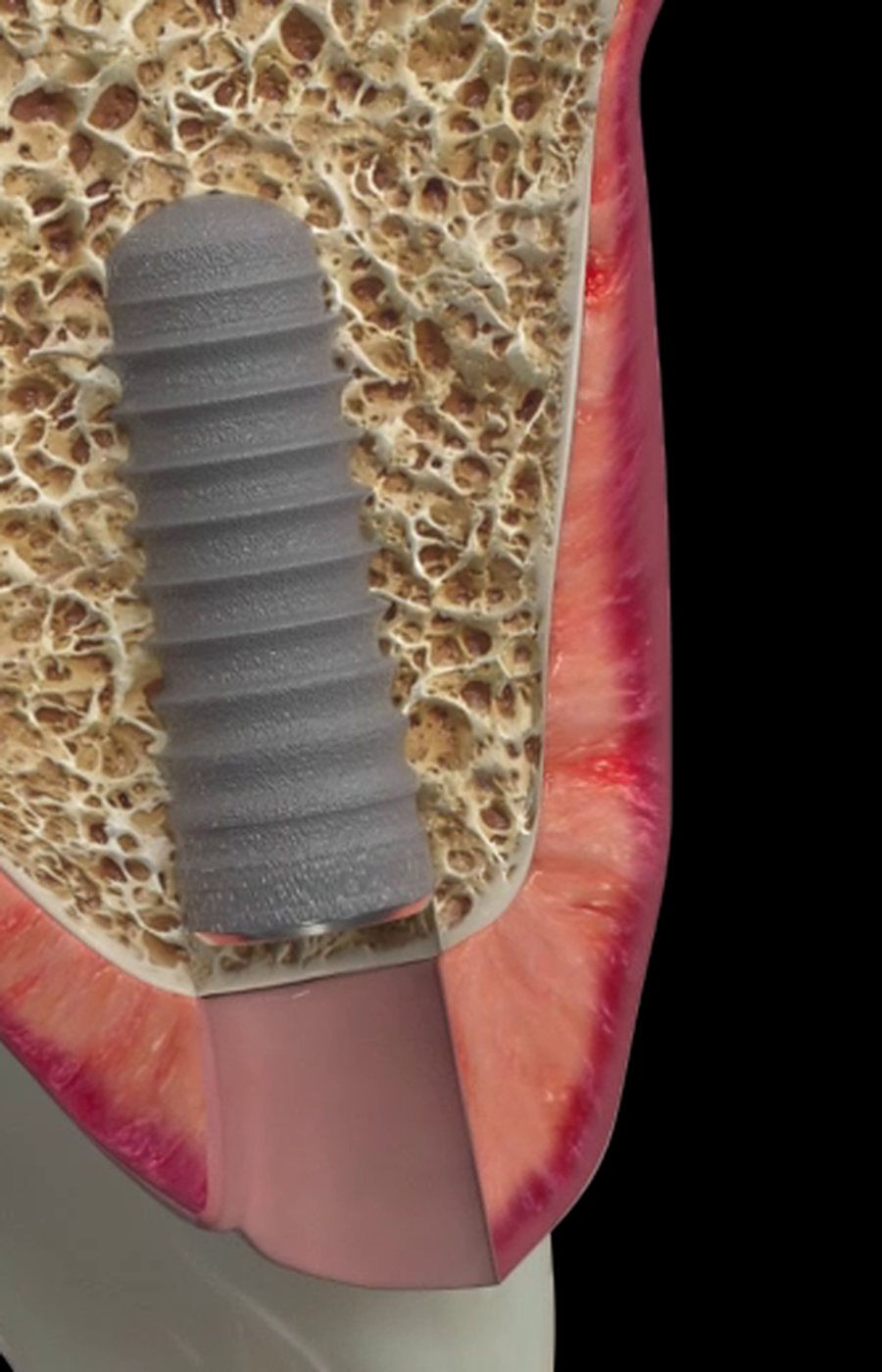
- Cemented restoration: an abutment is screwed into the implant; the crown is then cemented onto this abutment, like a crown on a natural tooth.
- Screw-retained restoration: the crown and its abutment form a single piece, fixed into the implant with a screw; the screw is reached through a small channel on the chewing or inner surface, sealed with tooth-coloured composite.
Why we favour the screw-retained restoration
No cement under the gum
During cementation, excess cement can flow under the gum, where it is hard to see and to remove. Studies have linked these residues to inflammation of the tissues around the implant, which can go as far as bone loss (peri-implantitis). The screw-retained restoration removes this risk at the source.
Removable and repairable
A screw-retained crown can be removed without damage: for deep cleaning, to check the tightening, to replace an abutment, to repair the ceramic or to modify a neighbouring restoration. A cemented crown often has to be cut off to be removed.
Simpler follow-up
Checking the gum and bone around the implant is easier when the junction can be inspected. The 2023 European recommendations on the prevention of peri-implant diseases stress a restoration that allows access for cleaning and the absence of excess cement.
When a cemented restoration keeps its interest
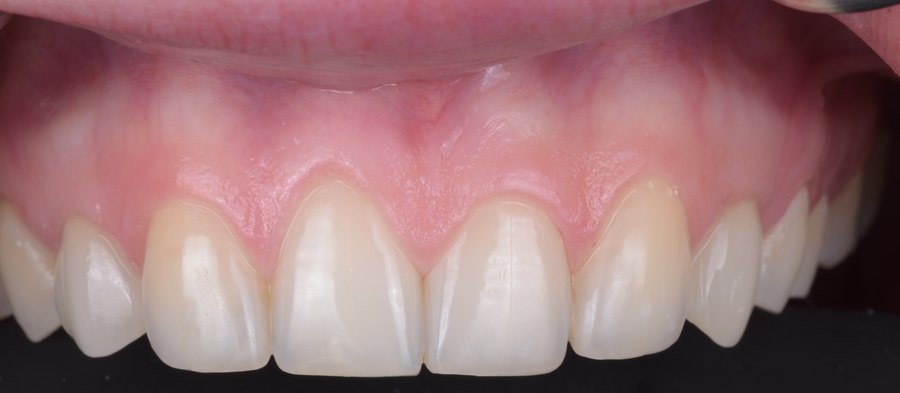
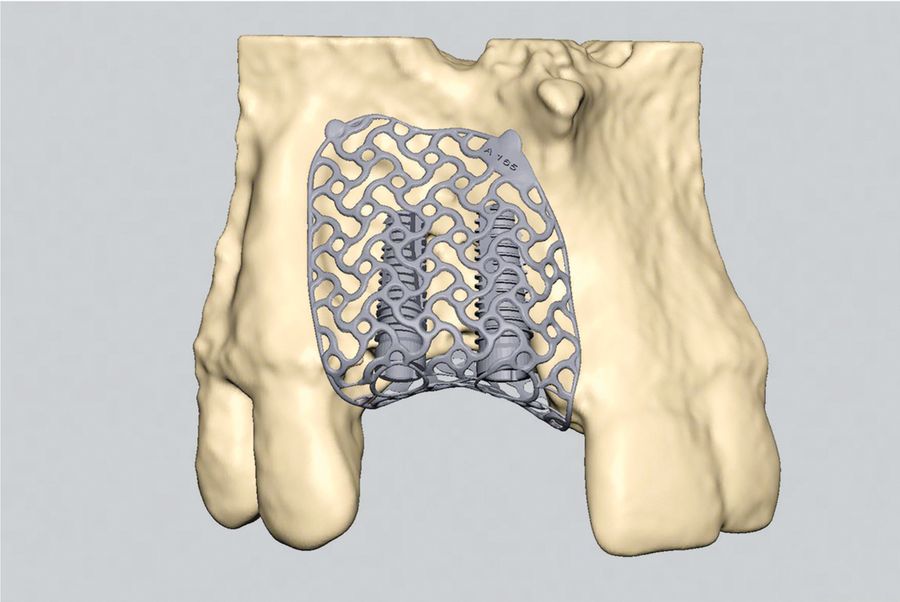
If the axis of the implant brings the screw channel out on the visible surface of a front tooth, cementation may be preferable for aesthetics. Angled screw-channel abutments now reduce these situations, and precise implant planning (guided surgery) usually makes it possible to plan an axis compatible with a screw-retained restoration. Cementation then remains a reasoned exception, performed with an abutment whose margin is accessible and with careful removal of the cement.
What it changes for you
- The small screw channel is sealed and invisible in most cases.
- If a problem arises, the crown can be removed and refitted during the same appointment.
- Original components (screw, abutment) remain available from the manufacturer of your implant.
At the practice
Implant restorations are planned from the moment the implant is placed, using the digital impression and three-dimensional imaging, so that the axis of the implant allows a screw-retained crown. They are made with original Straumann or Dentsply Sirona components.
Sources
- Wilson T. G., “The positive relationship between excess cement and peri-implant disease: a prospective clinical endoscopic study”, Journal of Periodontology, 2009 (accessed 19 October 2026)
- Herrera D. et al., “Prevention and treatment of peri-implant diseases – The EFP S3 level clinical practice guideline”, Journal of Clinical Periodontology, 2023 (accessed 19 October 2026)
To go further on periodontics and implant surgery: Docteur Victor Hazout’s website.