Why replace a missing tooth?
A missing tooth leaves a space that the mouth does not tolerate for long without change. The neighbouring teeth may tilt into the gap, the opposing tooth may drift down or up looking for a contact, and the bone that supported the root gradually resorbs. Chewing shifts to the other teeth, which wear faster.
Replacing the tooth is therefore not only a matter of appearance: it is also a way of protecting the remaining teeth and preserving bone.
Three fixed solutions
The bonded bridge
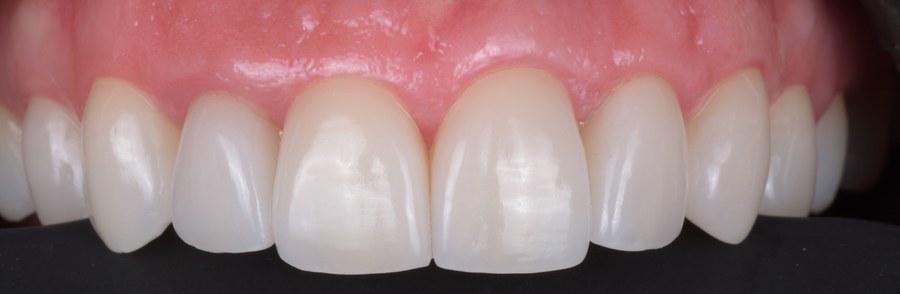
A bonded bridge replaces the missing tooth with a ceramic tooth attached to a thin wing, bonded to the inner surface of one neighbouring tooth (a single-wing “cantilever” bonded bridge). The neighbouring tooth is not prepared, or hardly at all: only what is needed for bonding is removed, within the enamel.
- Strengths: no damage to the neighbouring teeth, no surgery, a reversible procedure, a good aesthetic result in the front of the mouth.
- Limits: it needs healthy enamel and enough space; it is not suitable for molars or for people who clench or grind heavily; debonding remains possible and is usually repaired by rebonding.
- Typical indications: a lateral incisor missing from birth (agenesis), an incisor lost after an injury, waiting for the end of growth in a teenager.
The conventional bridge
A conventional bridge rests on the two neighbouring teeth, which are prepared to receive crowns; the missing tooth is fixed between them. It is a well-established solution, but it requires reducing two teeth, sometimes healthy ones.
- Strengths: fixed, no surgery, completed in few appointments; useful when the neighbouring teeth are already crowned or heavily restored.
- Limits: two teeth are prepared, with a long-term risk for their nerve; cleaning under the middle tooth is more demanding; the bone under the gap keeps resorbing.
The implant
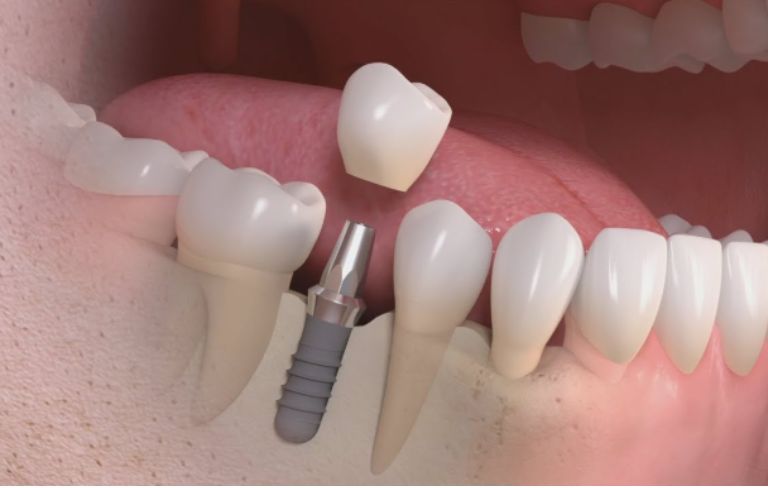
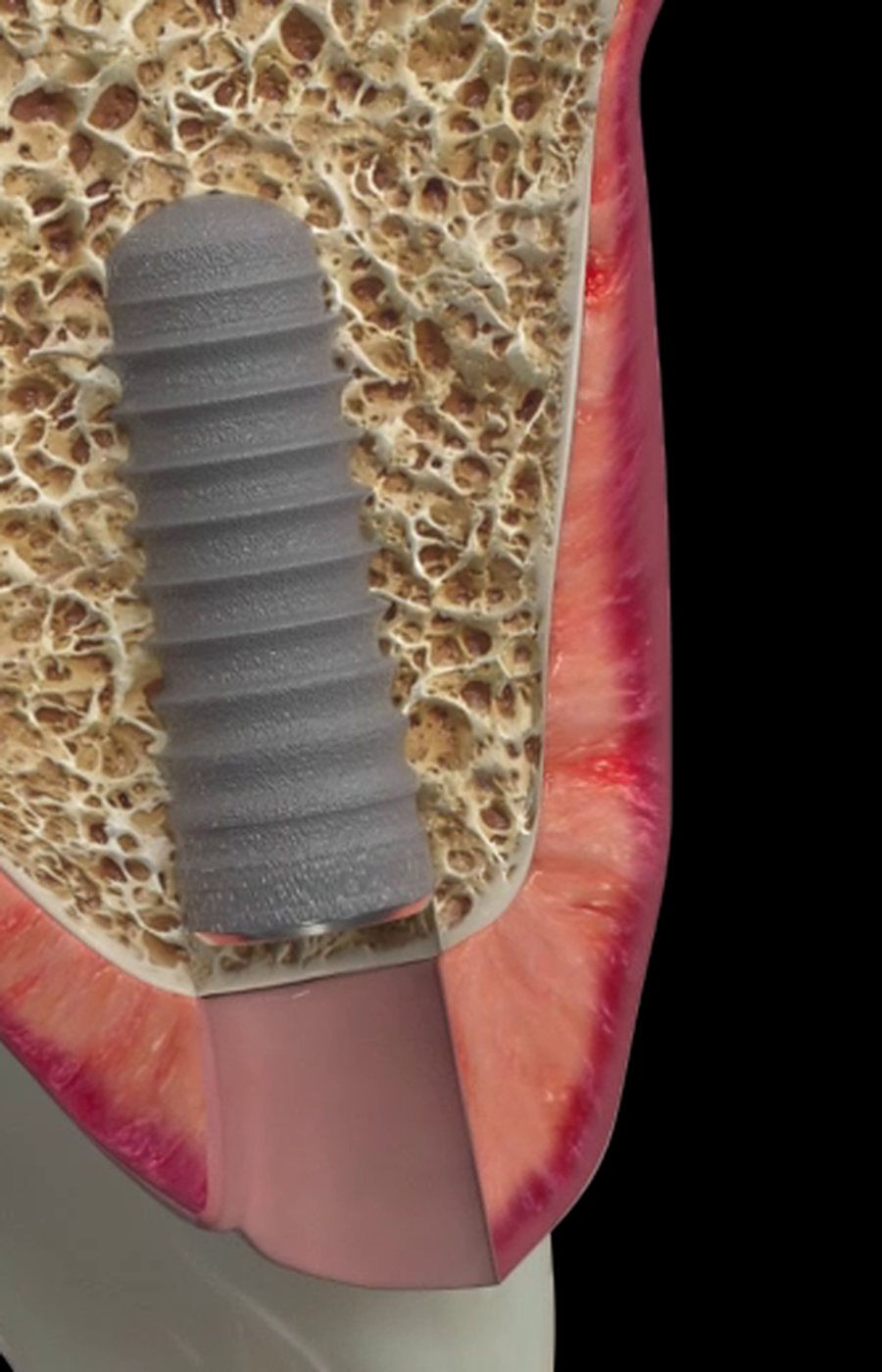
An implant is an artificial titanium root placed in the bone, on which a crown is fixed. It replaces the tooth independently: the neighbouring teeth are left untouched and the bone keeps being stimulated.
- Strengths: neighbouring teeth intact, bone maintained, cleaned like a natural tooth, a durable solution when the conditions are met.
- Conditions: enough bone volume (otherwise a graft is possible), healthy gums, completed growth, a compatible general health and any periodontal disease treated beforehand.
- Limits: a surgical procedure, usually simple; a treatment in several stages; a higher initial cost.
How we decide at the practice
There is no right solution in the abstract: there is the solution suited to one mouth and one person. Here is the order in which we examine the situation.
- The neighbouring teeth: if they are healthy, we avoid preparing them; the choice is then between the implant and the bonded bridge. If they are already crowned or badly damaged, the conventional bridge becomes logical again.
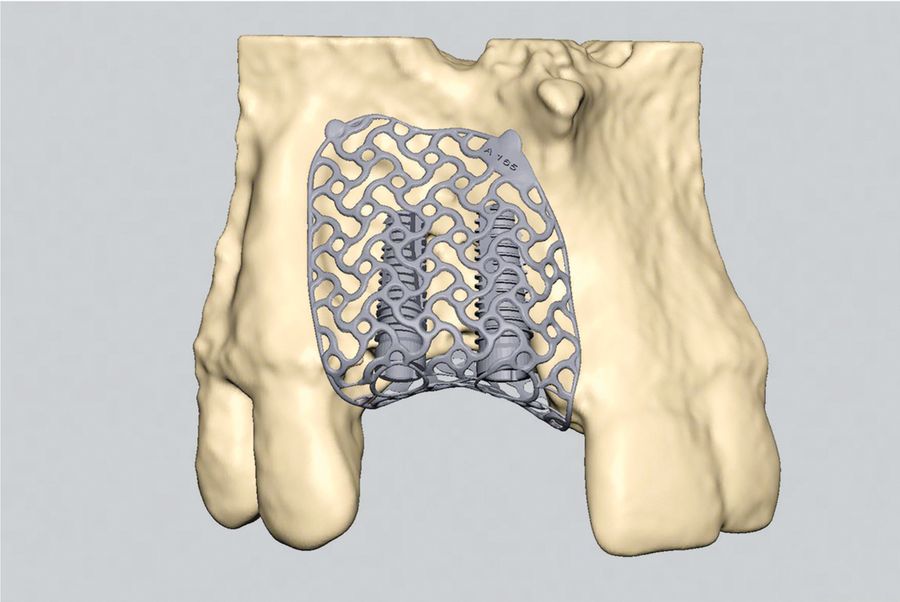
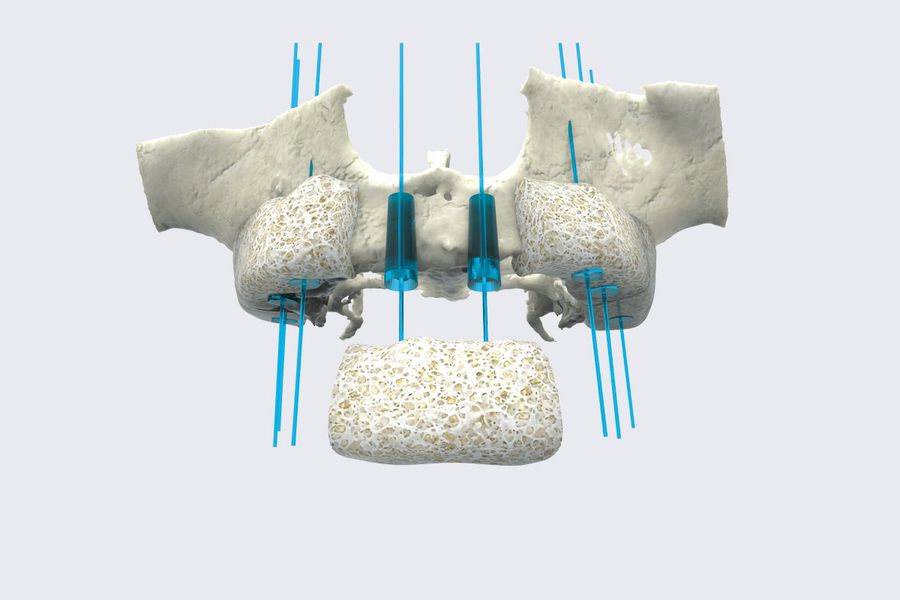
- Bone and gums: a clinical examination and three-dimensional imaging (cone beam) measure the available volume. Insufficient bone does not rule out an implant, but it requires a graft, which weighs in the decision.
- Age: in teenagers and young adults, the implant waits for the end of growth; the bonded bridge is then the interim solution we prefer, because it preserves everything.
- General health and habits: smoking, poorly controlled diabetes and some treatments (bisphosphonates, radiotherapy of the face) guide the decision and call for medical advice.
- The bite: heavy clenching or grinding weakens a bonded bridge and points to another option.
- Your expectations: aesthetics, timing, number of appointments and budget are discussed openly before deciding.
In practice, when the conditions are met, the implant is the solution we propose first for a single missing tooth, because it preserves the neighbouring teeth and the bone. The bonded bridge is our solution of choice for an incisor in a young patient, or when surgery is not wanted. The conventional bridge keeps its place when the neighbouring teeth already need crowns.
What if nothing is done?
Not replacing a tooth is sometimes a reasonable choice, for instance a wisdom tooth or a molar with no opposing tooth. In other cases, the sensible step is to talk about it: a consultation measures the real consequences in your mouth and sets, together, the right time to act.
At the practice
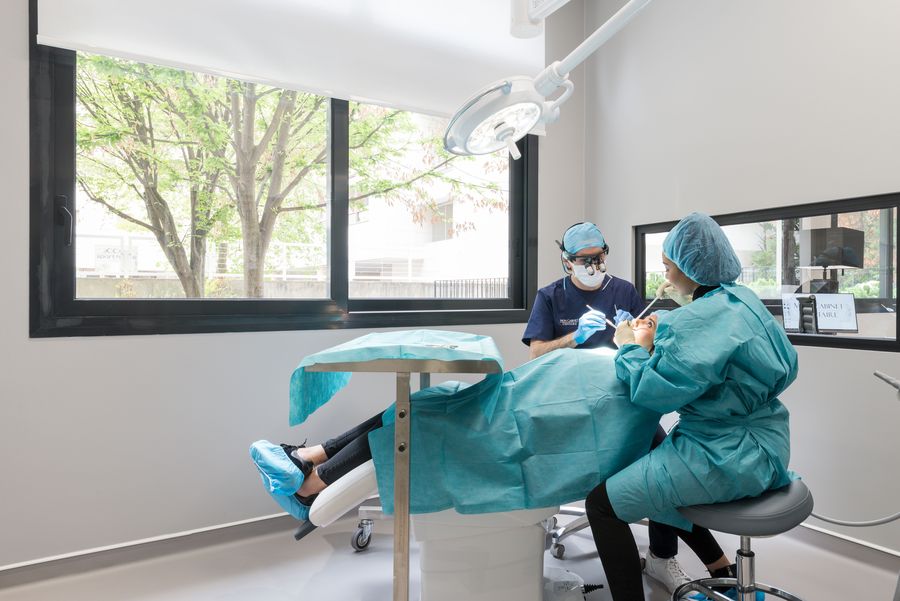
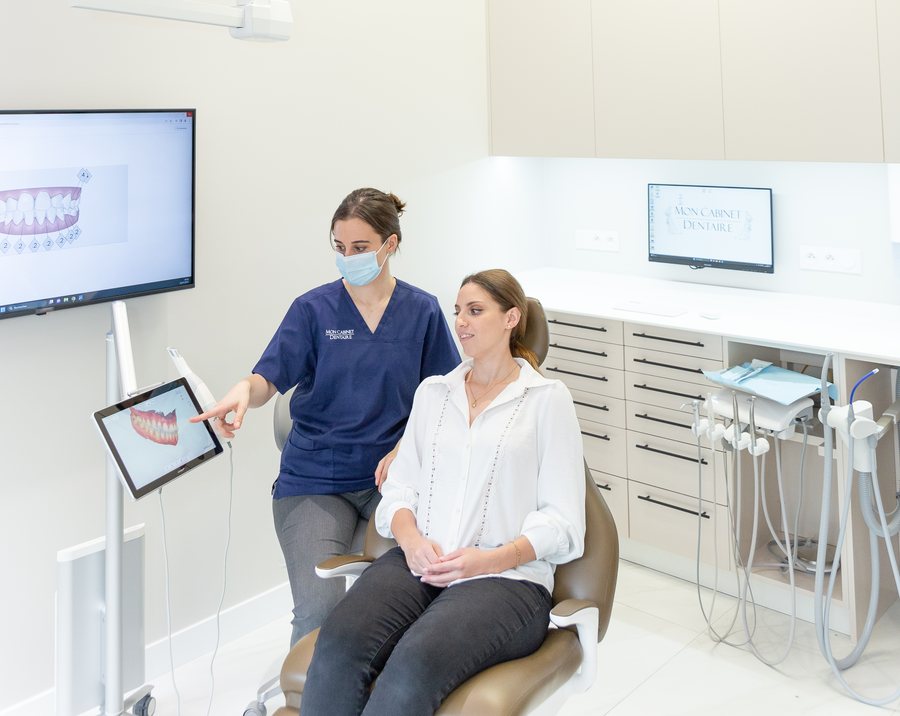
Implants are placed by Docteur Michaël Arroche and Docteur Victor Hazout; bonded bridges and crowns are made by the restorative and aesthetic team. Impressions are taken with an optical scanner, without impression paste. A written estimate and treatment plan are given to you before any procedure.