How do aligners work?
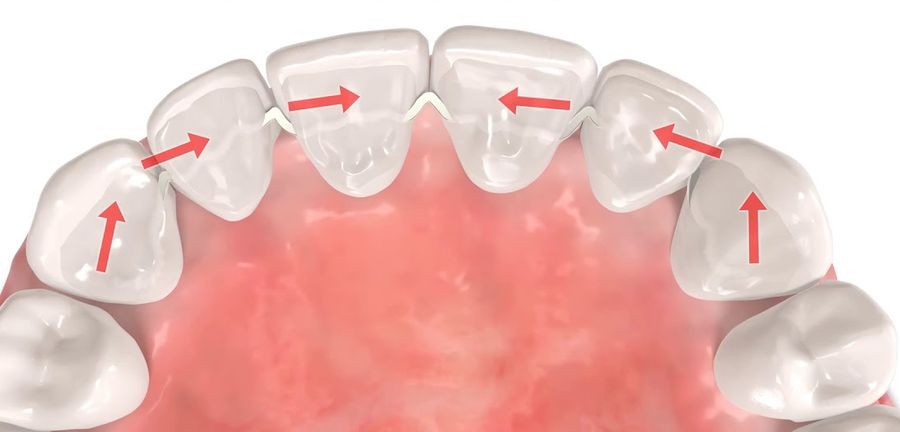
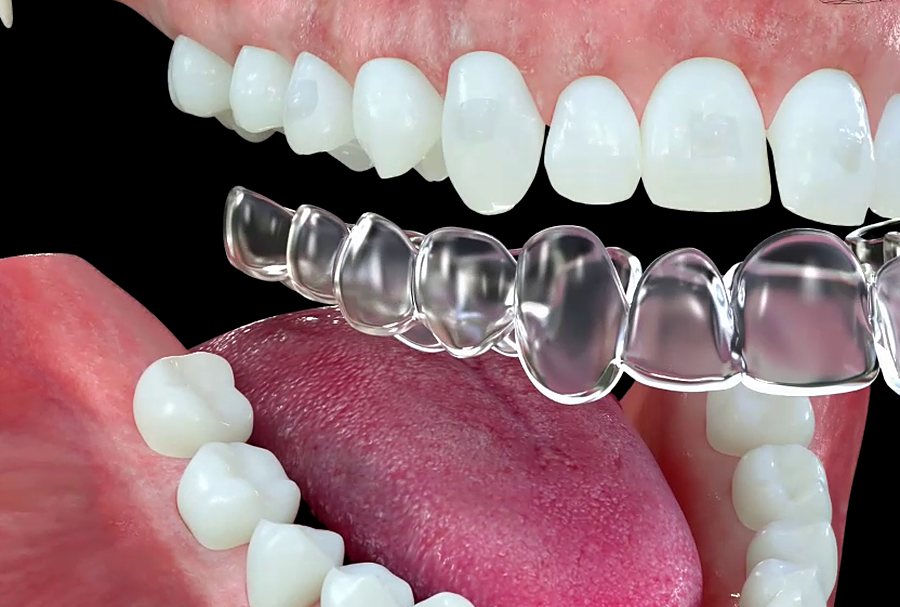
After a digital impression, the orthodontist plans on computer the movement of each tooth, step by step, up to the final position. A series of clear trays is manufactured; each applies a light, continuous force, and you move on to the next at the pace set by the practitioner. Small composite bumps bonded to some teeth (attachments) make more complex movements possible.
Why Invisalign
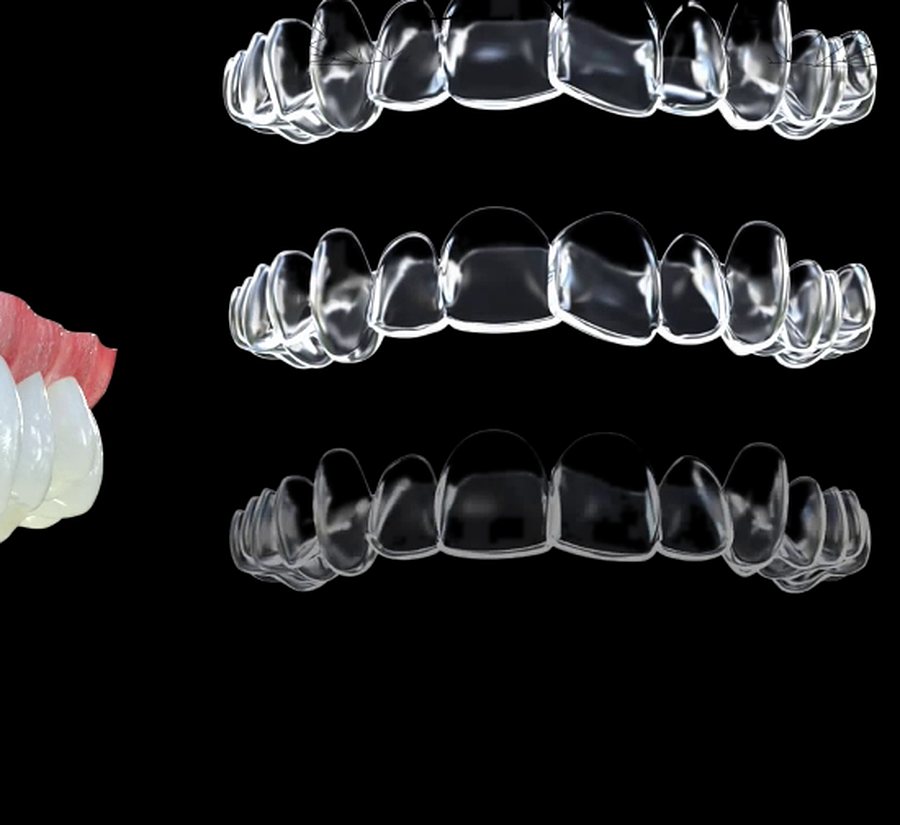
Invisalign, from the American company Align Technology, received marketing clearance in the United States in 1998: it is the first aligner system marketed on a large scale, and the one with the longest clinical track record. More than twenty-two million patients have been treated with this system worldwide.
- SmartTrack material: a multilayer plastic designed to deliver a more constant force and to fit the teeth more closely.
- ClinCheck software: the simulation of the treatment, validated and adjusted by the orthodontist, tooth by tooth.
- Attachments and specific cut-outs: tools for difficult movements (rotations, uprighting, space closure).
- Dedicated ranges: growing children, teenagers, adults, minor or comprehensive corrections.
It is the system our orthodontists use at the practice, for the reliability of its predictions and the quality of its material.
The other systems
Other manufacturers offer well-made aligners: Spark (Ormco), ClearCorrect (Straumann), SureSmile (Dentsply Sirona), Angel Aligner, as well as aligners produced directly by 3D printing. The differences lie in the material, the planning software, the accessories available and the accumulated experience. An orthodontist can obtain good results with several of them; what matters is the diagnosis and the treatment plan, not the tray alone.
What aligners do not do on their own
- They do not replace the diagnosis: a clinical examination, radiographs and an analysis of the bite precede any decision.
- They require cooperation: the trays only work if they are worn as prescribed.
- Some movements remain more predictable with braces, or require accessories and close follow-up.
- Offers sold remotely, without an examination or follow-up by an orthodontist, skip these steps: we advise against them.
At the end of treatment
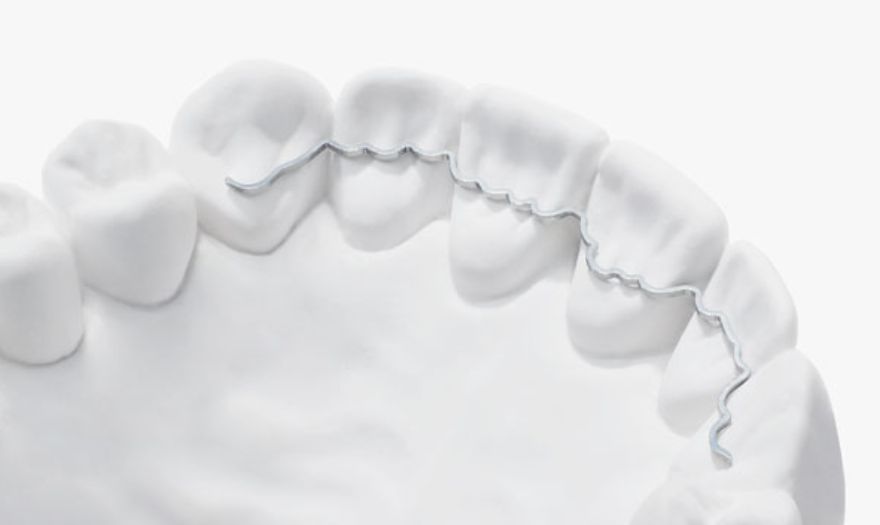
As after any orthodontic treatment, a retainer maintains the result: a custom-made bonded wire (Memotain) or a night-time tray, depending on the case.
At the practice
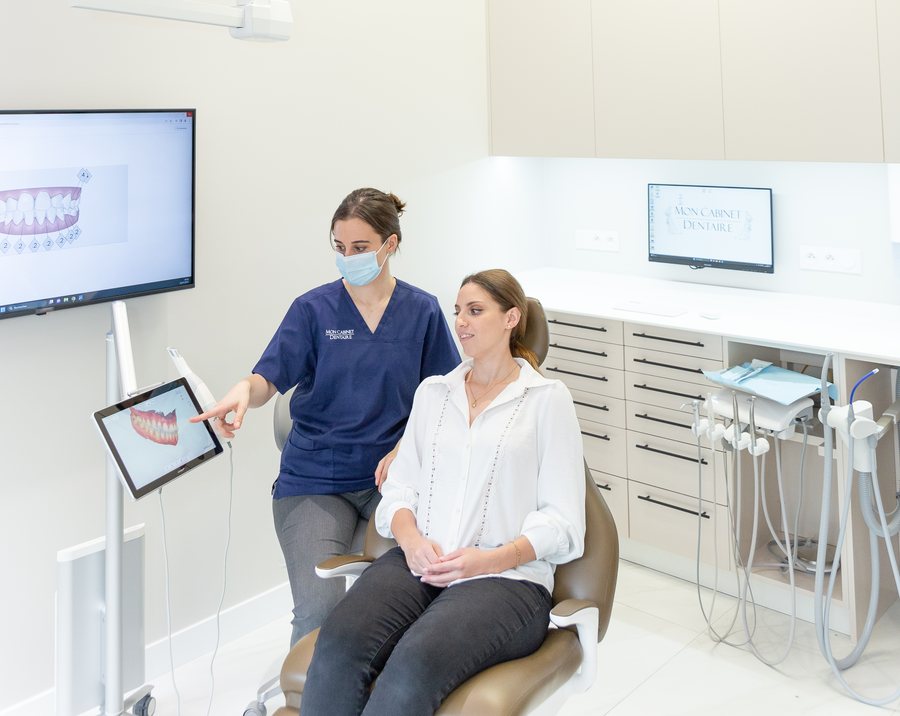
Aligner treatments are carried out by Docteur Alison Cohen, specialist orthodontist, and Docteur Margaux Rioual. The first consultation includes the examination, the digital impression and, if you wish, an on-screen simulation of the tooth movements.
Sources
- Align Technology, annual report (Form 10-K) for fiscal year 2025, filed with the SEC: FDA clearance in 1998, more than 22 million patients treated (accessed 19 October 2026)
- Martin C. et al., “Retention procedures for stabilising tooth position after treatment with orthodontic braces”, Cochrane Database of Systematic Reviews, 2023 (accessed 19 October 2026)