
Digital periodontitis
PERSONALISED 3D PARODONTAL CONCEPTION
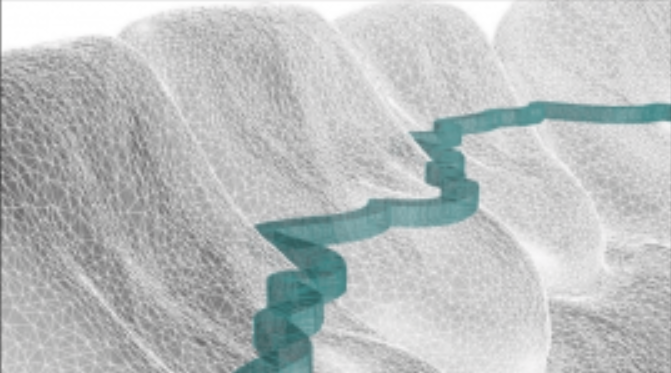
The digital periodontitis It revolutionizes the management of periodontal pathologies by integrating cutting-edge technologies to design customized devices. Among these advances, the personalized periodontal treatment in 3D represents a major innovation, offering a precise and durable solution for stabilizing mobile teeth and restoring masticatory functionality.
Precision and Comfort thanks to Computer-Assisted Design
Computer-assisted design (CAD) allows the creation of a brace that is perfectly adapted to the anatomy and dental alignment of each patient. This process consists of several key steps:
-
Digital optical impression :
- A digital fingerprint is created using high-precision intraoral scanners.
- Unlike conventional physical impressions (made with silicone), this method guarantees a faithful reproduction of dental structures, minimizing the margin of error.
- The details captured by the digitization allow for precise and customized design of the brace.
-
Design and 3D fabrication :
- The digital model of the dental arch is used to design a splint that fits perfectly onto the dental surfaces.
- The manufacturing process is carried out using 3D printing or milling techniques, offering micrometric precision.
-
Treatment by electropolishing :
- After manufacturing, the compression wire undergoes an electropolishing process, which gives its surface a smooth and antibacterial finish.
- This treatment improves the comfort of the patient and reduces the accumulation of bacterial plaque, thus facilitating oral hygiene.
Advantages of Digital Imprinting and 3D Design
- Increased accuracy The digital footprint eliminates the distortions and inaccuracies often associated with conventional impressions, ensuring a perfect fit of the splint.
- Speed and efficiency The digital process reduces the time required to design and manufacture the brace, thus improving the patient experience.
- Comfort for the patient The digital impression is non-invasive, requiring no physical materials in the mouth, which is particularly advantageous for sensitive patients.
Functions and Benefits of Digital Contention
3D personalized periodontal therapy plays an essential role in the management of mobile teeth in periodontitis. Its main objectives include:
-
Reduction in dental mobility :
- The splint stabilizes the teeth affected by periodontitis, providing a better distribution of occlusal forces.
- This stability improves the patient's masticatory comfort and prevents additional trauma to the periodontal tissues.
-
Creating an environment conducive to healing :
- By limiting the micromovements of the teeth, the retention promotes the regeneration of the periodontal tissues (ligament, bone, gum).
- This allows for better repair of the supporting structures, thereby prolonging the lifespan of the affected teeth.
-
Distribution of occlusal forces :
- The splint redistributes the masticatory forces uniformly between the stabilized teeth and their neighbors.
- By orienting these forces axially, it reduces the tensions on the dental roots and the alveolar bone, reducing the risk of bone resorption.
-
Ease of oral hygiene :
- Thanks to its smooth and antibacterial design, the splint minimizes plaque retention areas.
- The patient can maintain optimal hygiene with interdental brushes and dental floss, which is crucial to prevent periodontal relapses.
-
Preservation of dental surfaces :
- Contrary to traditional beliefs, digital orthodontics does not require any invasive preparation of the teeth, thus preserving their natural structure.
Reinforcement with Glass Fiber: An Aesthetic and Robust Option
In some cases, particularly for aesthetic or functional reasons, a reinforcement by glass fiber Can be integrated with the brace:
- Discreet aesthetics The glass fiber is translucent, which makes it virtually invisible, especially suitable for the front teeth.
- Increased resistance The glass fiber provides additional strength to the retainer while maintaining moderate flexibility, adapted to the natural stresses of chewing.
- Biological compatibility This material is biocompatible and well tolerated by the oral tissues, limiting the risk of irritation or adverse reactions.
Clinical Impact and Quality of Life of the Patient
Customized 3D periodontal therapy significantly improves the quality of life of patients with periodontitis. Its benefits include:
- Increased comfort Perfectly fitted compression eliminates the unpleasant sensations associated with poorly adapted or invasive splints.
- Sustainability Thanks to the precision of the design and the quality of the materials, these solutions offer a long-term solution.
- Restoration of the masticatory function By stabilizing the mobile teeth, the patient regains functional chewing, which is essential for a balanced diet.
Conclusion
The personalized periodontal treatment in 3D Illustrates the remarkable advancements in digital orthodontics. By combining the precision of optical impressions, custom design, and cutting-edge materials, this approach offers an effective, durable, and comfortable solution for stabilizing mobile teeth. The integration of modern technologies, such as electropolishing and fiber-reinforced glass, optimizes stability, aesthetics, and hygiene, thereby improving both oral health and the overall well-being of patients.
Your specialist

Dr Victor Hazout
Periodontist
My Dental Clinic
My Dental Clinic
119 Rue du Président Wilson
Ground floor on the right
92300 Levallois-Perret
contact@mon-cabinetdentaire.com
Tél: 01 42 67 05 04
Monday-Friday: 9:00 a.m. to 7:00 p.m.
Sam: 9:00 a.m. to 4:00 p.m.