What is a splint for?
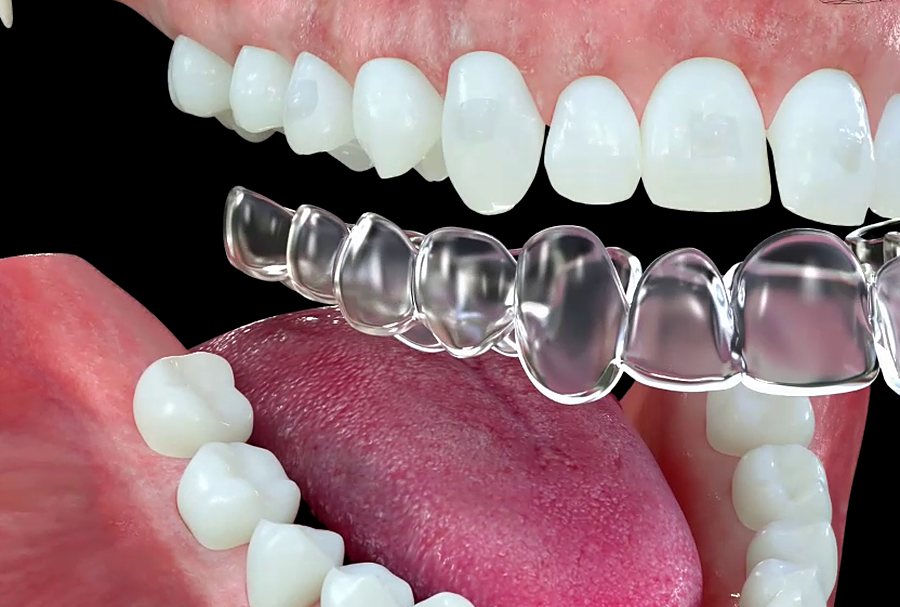
A splint, or retainer, is a device fixed on the inner surface of the teeth to link them together. It spreads chewing forces over several teeth, reduces the mobility of those that have lost bone support and prevents aligned teeth from moving again.
In periodontics it comes after the treatment of the disease, never instead of it: a tooth that is loose because the gum is infected must be treated first. The splint then stabilises what has been healed.
The fibre-glass splint
A ribbon of glass fibres impregnated with resin is bonded to the inner surface of the teeth, then covered with composite. The result is translucent, rigid and almost invisible.
- Indications: mobile teeth after periodontitis, front teeth to be linked together, reinforcement of a weakened area.
- Advantages: high rigidity, no metal part, discreet appearance, placed in a single chairside session, repairable.
- Points to watch: careful bonding and suitable hygiene (interdental brushes, floss with a threader) are essential; the composite surface must stay smooth so that it does not retain plaque.
The Memotain wire
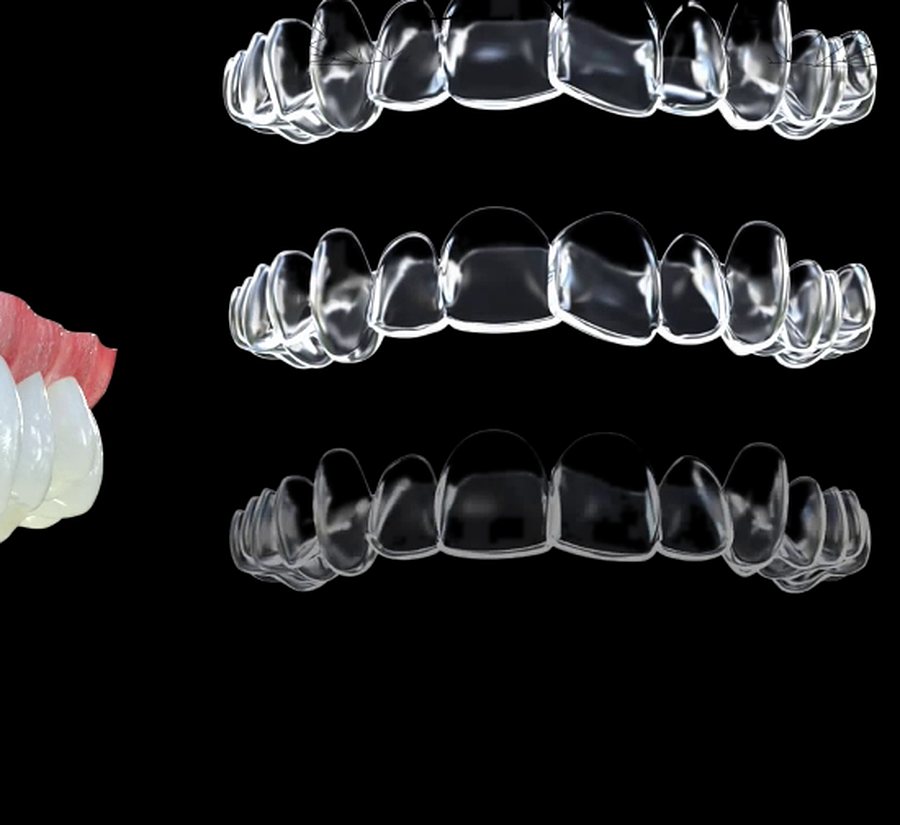
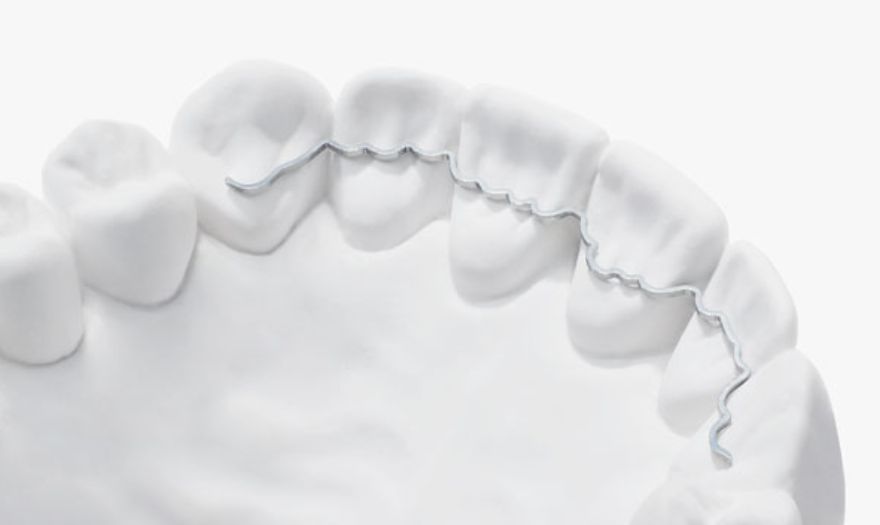
Memotain is a nickel-titanium retainer wire made to measure by computer-aided design and manufacturing, by the German company CA Digital. From an optical impression of your teeth, the wire is laser-cut from a sheet of alloy and then electropolished: it follows the inner surface of each tooth exactly.
- Features: a flat, thin wire, a smooth surface after electropolishing, a precise fit without manual bending, placed with a transfer tray.
- Advantages: very comfortable for the tongue, few contact points and therefore easier hygiene, reproducible precision from one tooth to the next.
- Indications: maintaining alignment after orthodontic treatment, stabilising slightly mobile teeth, situations where thinness and comfort come first.
Which one to choose?
The two retainers do not meet the same needs, and we often use them in a complementary way.
- Significant mobility: the rigidity of fibre glass is preferred to link teeth that have lost a lot of support.
- Maintaining alignment: the Memotain wire, discreet and comfortable, is our reference to prevent relapse after orthodontics.
- Space and bite: the room available on the inner surface of the teeth and the contacts with the opposing teeth guide the choice of device.
- Hygiene: in both cases, regular follow-up and suitable interdental cleaning determine how long the retainer lasts.
Studies comparing the different types of retainers do not single out one device as superior in every situation; the examination of your mouth decides.
Why these two devices at the practice
We chose these two retainers for their precision and comfort: fibre glass for its rigidity and discretion, Memotain for its made-to-measure fit and smooth surface. They are placed by Docteur Victor Hazout, periodontist, as a continuation of periodontal treatment, and by our orthodontists at the end of an alignment treatment.
Sources
To go further on periodontics and implant surgery: Docteur Victor Hazout’s website.