The principle: protecting the space where bone must regrow
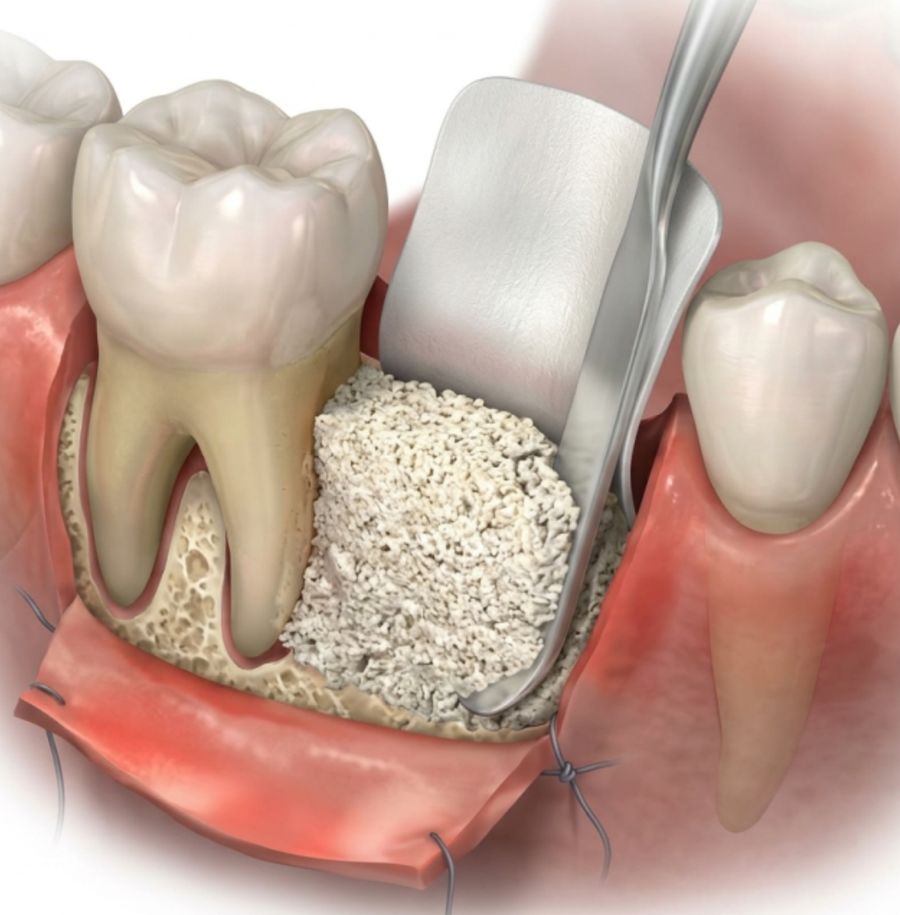
A bone graft combines a filling material (the patient’s own bone, a bone substitute or a mixture of both) and a barrier that keeps this volume in place and prevents the gum from invading it during healing. This is guided bone regeneration. For large defects, the barrier must be rigid: it is then made of titanium, or reinforced with titanium.
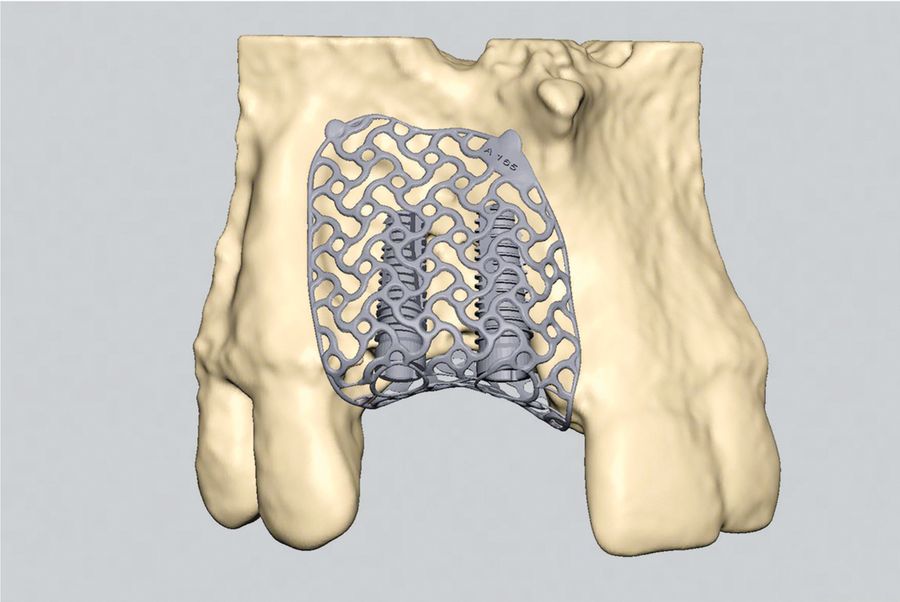
The custom-made titanium mesh
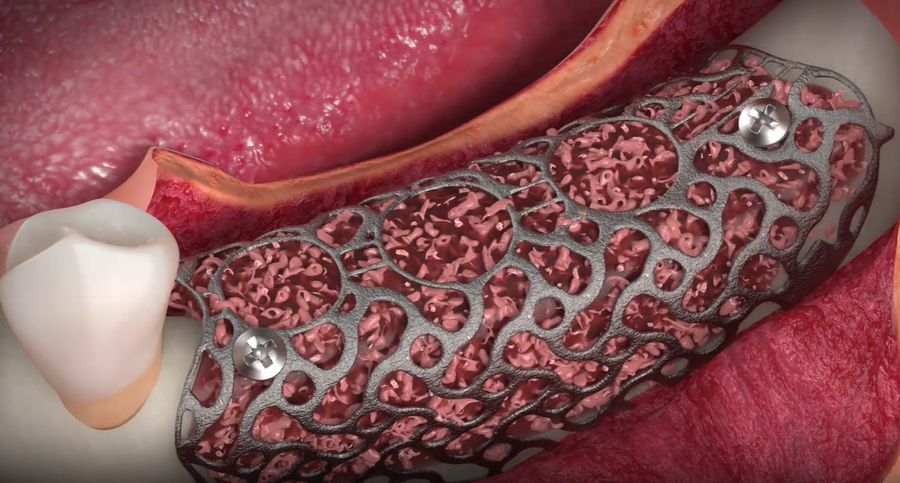
From three-dimensional imaging (cone beam) and the implant project, a mesh is designed on computer to the exact shape of the bone volume to be rebuilt, then 3D-printed in medical-grade titanium. It arrives in the operating room ready to be placed and screwed.
- Indications: extensive defects; loss of bone in height and in width at the same time; reconstructions spanning several teeth; situations where the final shape of the bone must match precisely the planned position of the implants.
- Advantages: no bending or cutting during surgery, reproducible shape, stable maintenance of the volume, shorter operating time.
- Constraints: prior manufacturing (time and cost), removal of the mesh during a second procedure, possible exposure through the gum, which requires monitoring.
The titanium-reinforced PTFE membrane
Dense PTFE (polytetrafluoroethylene) is a non-resorbable material, impermeable to bacteria. Reinforced with a thin titanium frame, it can be cut and shaped at the chair, then fixed with screws or pins to hold the graft.
- Indications: defects of moderate size or simple shape, width augmentation, some limited height defects, sites of one or two teeth.
- Advantages: immediate adaptation to the anatomy encountered, no manufacturing delay, lower cost, simple removal.
- Constraints: manual shaping during surgery, less rigidity than a mesh for large volumes, removal required at a second stage, possible exposure.
How we decide
- The extent and shape of the defect: the larger and more complex the volume to rebuild, the more relevant the custom mesh; a moderate, regular defect is well treated with a reinforced membrane.
- The precision expected: when the implant positions are planned to the millimetre, the mesh reproduces exactly the planned volume.
- The number of procedures: both devices have to be removed; this second step is often combined with implant placement.
- The gum: its thickness and quality determine the risk of exposure, common to both techniques; a gum graft may be proposed before or during the reconstruction.
- Timing and budget: custom manufacturing takes time and costs more, to be weighed against the expected benefit.
The other techniques
In some situations other techniques remain preferable: block graft, sinus lift or a resorbable collagen membrane for small defects. The choice is made after the clinical examination and three-dimensional imaging, and it is explained to you before any decision.
At the practice
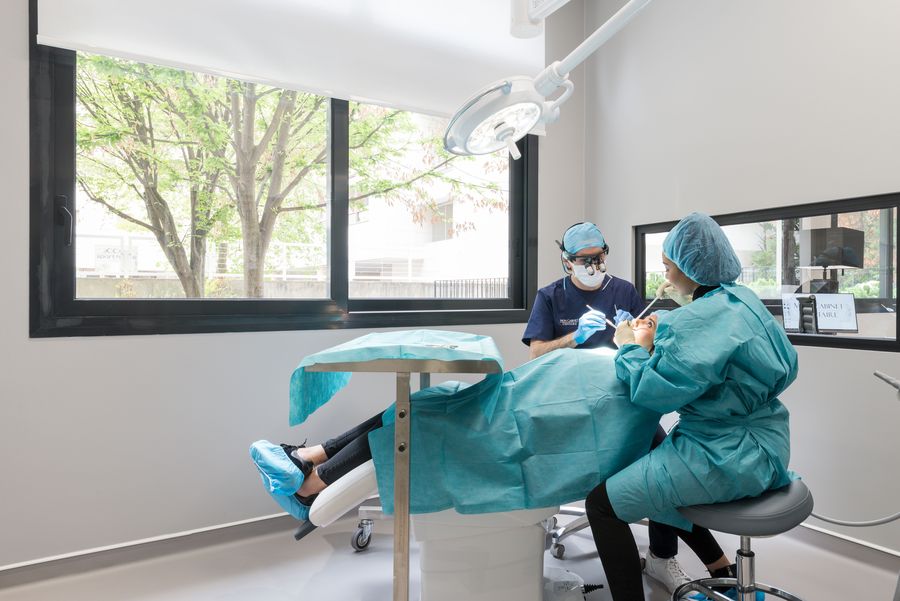
These reconstructions are performed in the practice’s operating room by Docteur Victor Hazout. Bone grafting with a custom titanium mesh is presented on a dedicated page of this site, and Docteur Hazout’s website implants-parodontie.com covers these techniques in more depth.
To go further on periodontics and implant surgery: Docteur Victor Hazout’s website.