
Specialty
Implantology
Dental implantology is today one of the most successful solutions for restoring functional, aesthetic, and durable dentition. This discipline, derived from scientific and technological advancements, offers reliable alternatives for replacing missing or severely damaged teeth. Our dental practice Met takes pride in offering implant treatments tailored to your needs and carried out with recognized expertise.
Your specialists
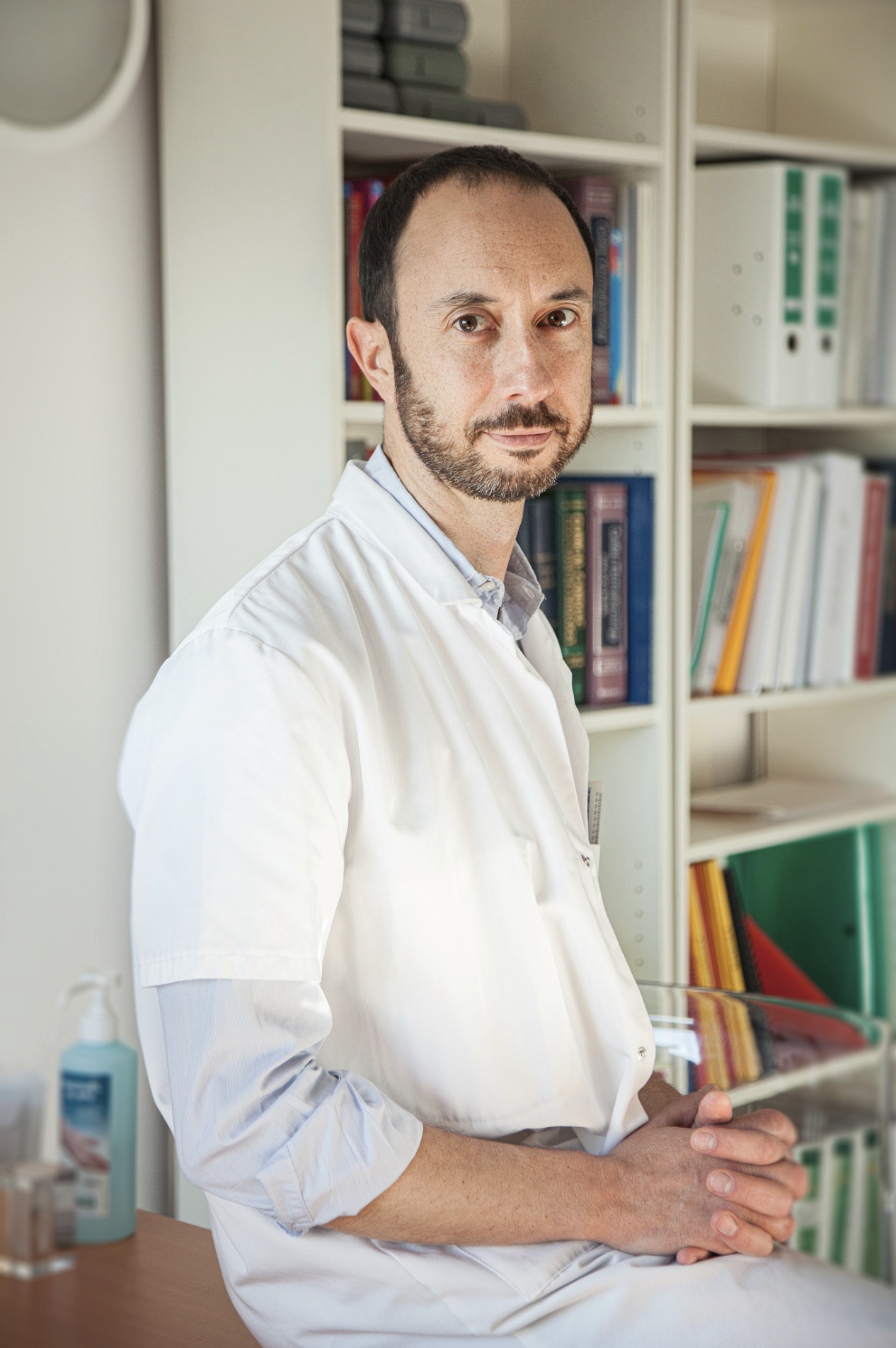
Dr. Michaël Arroche
Dentist
Dr Victor Hazout
Periodontist, Dentist
Dental Implants: A Revolution for Your Health and Your Smile.
What is a dental implant?
A dental implant is an artificial root, usually made of titanium, inserted directly into the jawbone. It serves as a support for a crown, a bridge, or even a complete prosthesis. The goal is to replicate the function and natural appearance of teeth while preserving oral health.
Why Choose Implantology?
Tooth loss, whether due to an accident, periodontal disease or age, can have major consequences:
- Functional: difficulty chewing or speaking.
- Aesthetic: distortion of the smile and facial harmony.
- Oral health: migration of adjacent teeth, bone resorption.
Implantology offers significant advantages compared to other solutions (such as bridges or removable dentures):
- Stability: strong anchoring in the bone, comparable to a natural tooth.
- Durability: a solution that can last for several decades with proper maintenance.
- Bone preservation: stimulation of the bone, preventing its resorption.
- Comfort: absence of discomfort associated with removable prostheses.
- Aesthetics: a result that blends perfectly with the dentition.
The Protocol for Placing a Dental Implant: Step by Step.
The placement of a dental implant is a well-controlled procedure, performed with great precision, without pain and in optimal comfort conditions. Here are the different steps we follow in our clinic to guarantee you a result that meets your expectations.
- The implantation consultation.
During the first consultation, we assess your situation in a holistic way. This step includes:
- A personalized consultation: we discuss your expectations, your medical and dental history, as well as any potential contraindications.
- A clinical examination: observation of your teeth, gums and occlusion.
- Additional examinations: X-rays and a 3D scan are performed to analyze the quality and quantity of the bone, and to identify important anatomical structures.
After this first visit, we draw up a personalized treatment plan tailored to your specific needs and provide you with a quote.
- The Preparatory Phase.
Depending on the case, a preliminary preparation of the area but also of the mouth in general may be necessary before the implant is placed:
- Pre-dental care: treatment of tooth decay, tartar removal, or treatment of the gums if necessary.
- Bone or gingival grafting (if necessary): in cases of insufficient bone or soft tissue, these procedures help to prepare a favorable environment for the implant.
- Orthodontic treatments: In some cases, orthodontic treatment can also be considered to create an ideal space by repositioning adjacent teeth, in order to ensure optimal placement for the implant and a harmonious distribution of masticatory forces.
Once these steps are completed, we plan the surgical intervention.
- The implantation of the implant (surgical phase).
The implantation of the implant usually takes place under local anesthesia in the two operating rooms of our clinic.
- A small incision is made in the gum to access the bone.
- A specific area is prepared in the bone using specific instruments.
- The implant is inserted into the bone at a predefined angle and depth using digital planning.
- A healing screw is placed if possible, and the gum is gently stitched.
- A period of several months of temporization is necessary to allow the implant to integrate firmly into the bone (osseointegration).
- The Plating of the Prosthesis.
Once the implant is perfectly osseointegrated, we proceed with the impression and then, at a second appointment, the placement of the prosthesis (the tooth):
- Imprint taking: A precise mold is created using a digital camera or a traditional impression, and is sent to our prosthetist.
- Placement of the final prosthesis: fixed to the implant, it is perfectly adjusted to integrate harmoniously with your existing dentition.
This stage marks the end of the treatment and the return to full dental function.
- Monitoring and Maintenance: Ensuring Sustainability
After the placement of your implant, we will accompany you in maintaining your oral health:
- Regular checks: follow-up visits allow the stability of the implant and the condition of the gums to be checked.
- Rigorous oral hygiene: we advise you on good practices to preserve your implants, such as using interdental brushes or a water flosser when necessary.
Thorough maintenance and regular follow-up are key to ensuring the durability of your implants in the long term.
Modern Approaches in Implantology
- Immediate Deployment: An Express Rehabilitation.
Traditionally, the placement of implants required a waiting period to allow the implant to integrate well with the bone (osseointegration). Thanks to technological advances, it is now possible, in some cases, to place a temporary crown immediately after implantation.
Advantages:
- Quick return to a situation without a missing tooth.
- Reduction in the number of appointments and shortening of the treatment time
- Preservation of the aesthetics of the smile from the end of the intervention.
The indications for implant placement depend on several factors such as the quality of the bone and the placement of the implants; our experts will carefully evaluate your case to propose the most suitable solution for you.
- Guided Surgery: Technology and Precision.
Guided surgery relies on the use of a 3D scanner and advanced planning software to create a personalized surgical plan. With these tools, we can virtually simulate the ideal position of implants by taking into account the anatomical structure of your mouth (bones, nerves, sinuses, etc.).
Based on this planning, a customized surgical guide is designed, often printed in 3D. This device, perfectly adapted to your mouth, is used to guide surgical instruments during the procedure, ensuring the placement of implants with maximum precision and minimizing risks.
Advantages:
- Faster and less invasive interventions.
- Reduction of postoperative pain.
- Implant placement optimized for better longevity.
This method guarantees a personalized and secure treatment.
- The Full Arch Concept: A Total Rehabilitation with Complete Confidence.
For patients with complete tooth loss, whether they have already lost all their teeth or the remaining teeth require extraction, the Full Arch concept offers a modern, functional and aesthetic solution. This procedure involves reconstructing a complete dental arch using a reduced number of dental implants, onto which a fixed prosthesis is firmly anchored.
What is the Concept Full Arch?
The Full Arch concept relies on the use of 4 to 6 dental implants strategically placed to support a fixed prosthesis, replacing all the teeth of an arch. Unlike conventional removable dentures, this approach offers exceptional stability, natural aesthetics, and functionality similar to that of natural teeth. Two main techniques are used:
- This method uses between 4 and 6 implants placed specifically to optimize contact with the available bone.
- It is often feasible in a single day, including the extraction of the teeth, the placement of the implants, and the fixing of a temporary prosthesis.
- Ideal for patients with moderate bone resorption, it allows the avoidance of bone grafts in many cases.
The Benefits of the Full Arch Concept:
Complete and Aesthetic Restoration.
The fixed prosthesis is designed to perfectly imitate the natural appearance of teeth, restoring a radiant and harmonious smile. It also preserves facial harmony by preventing the sagging of features often associated with tooth loss.
Comfort and functionality.
Offering unparalleled stability, the fixed prosthesis does not move, providing a comfort sensation similar to that of natural teeth. It also allows for effective chewing, even for harder foods, and improves speech for a more natural pronunciation.
Quick result.
Thanks to immediate loading, a temporary prosthesis is placed on the day of the intervention, allowing patients to quickly regain a functional and aesthetic smile, without going through a fitting phase.
Sustainable Solution.
The implants are firmly integrated into the bone, providing a stable base for the prosthesis and ensuring exceptional durability when properly maintained.
Simplicity of the Treatment.
The use of modern techniques and the strategic placement of implants allow for a reduction in the number of interventions required. In many cases, complex bone grafts can be avoided, simplifying the treatment while ensuring excellent results.
The Full Arch Treatment Process:
Diagnosis and Planning.
During the first consultation, a 3D scan is performed to assess the quality and quantity of the bone, as well as to determine the optimal areas for implant placement. Based on this information, a personalized treatment plan is developed, taking into account your anatomy and specific needs. This step also allows for verification that you are eligible for this type of treatment.
Implant placement and temporary prosthesis.
The implants are inserted under local anesthesia or sedation to ensure your comfort. Immediately afterwards, a temporary fixed prosthesis is placed, allowing you to regain a functional and aesthetic smile on the day of the procedure. This quick step is often completed in just one day.
Healing period.
For a few months, the implants integrate firmly into the bone (osteointegration), creating a stable base for the final prosthesis. During this period, the provisional prosthesis provides a satisfactory masticatory function and an aesthetically pleasing fit to maintain your daily comfort.
Placing the Final Prosthesis.
Once the osseointegration is complete, the final, custom-made prosthesis is fitted. Designed to offer optimal comfort, natural aesthetics, and durable functionality, it will allow you to regain an exceptional quality of life.
Why Choose Our Office for Your Full Arch Rehabilitation?
By opting for the Full Arch in our practice, you benefit from:
- Expertise from our team: experienced professionals specializing in complete rehabilitation techniques.
- State-of-the-art technologies: 3D scanning, digital planning, and guided surgery for maximum precision.
- Personalized follow-up: we accompany you at every step to ensure your comfort and the success of the treatment.
Management of Complex Cases in Implantology: Bone and Gingival Grafting.
In implantology, some complex cases require preliminary procedures to restore an optimal anatomical environment, particularly when the volume or quality of the bone and gum tissue is insufficient. These challenges, often linked to conditions such as bone atrophy, advanced periodontal diseases, or old dental extractions, are addressed through specialized graft techniques.
Bone Grafts: Restoring a Solid Support for Implants.
Bone regeneration is a crucial step in cases where alveolar bone is insufficient to support an implant. This insufficiency can result from several factors, including:
- Bone resorption after extraction: The bone tends to resorb naturally after the loss of a tooth, which can complicate the implantation of an implant.
- Traumatisms or infections: These events can cause a significant loss of bone mass.
- Systemic diseases: Some pathologies directly affect the quality and quantity of the bone.
To overcome these deficiencies, several types of bone grafts are performed:
- Autologous transplants: They consist of taking bone directly from the patient (for example, from the jaw). This type of transplant offers optimal biological compatibility, reducing the risk of rejection.
- Allogenic, xenogenic or synthetic grafts: These techniques use biomaterials specially designed to promote bone regeneration. They can be combined with protective membranes to guide bone growth (guided bone regeneration technique).
- Sinus lift (sinus elevation): A specific procedure to increase the bone height in the posterior area of the maxillary region, which is essential when the maxillary sinuses are too close to the bone crest.
Each intervention is carefully planned using three-dimensional imaging (scanner or CBCT) to accurately determine the areas requiring reconstruction. Once the graft is integrated, a healing period of several months is often required before the implant can be placed.
Gingival grafts: A key to stability and aesthetics.
Gingival grafts play an equally crucial role, especially in cases where the soft tissues surrounding the implant are insufficient to guarantee long-term stability and aesthetics. The absence or insufficiency of keratinized gum can lead to complications such as:
- Gingival recession: Risk of exposure of implants, affecting their durability.
- Chronic inflammation: Inadequate gum coverage can favor infections and compromise the success of the implant.
- Degraded aesthetics: A harmony of soft tissues is essential for a natural and balanced smile.
Gingival grafting techniques include:
- Connective tissue transplantation: Usually taken from the palate, this procedure is performed in areas where the gum is too thin or insufficient. It helps thicken the tissues and ensure their stability.
- Free gingival graft: It consists of adding keratinized gingiva to deficit areas to improve the strength and health of the tissues surrounding the implant.
- Tissue substitutes: In some cases, synthetic materials can be used to avoid autologous tissue harvesting.
All of these techniques are integrated into a personalized treatment protocol, tailored to the specific needs of each patient, taking into account their general health status, expectations, and technical constraints. Thanks to constant advancements in implantology, even the most complex cases can now be successfully treated, offering functional and aesthetic results of exceptional quality.
Why Choose Our Office?
Our expertise in implantology is based on years of clinical experience, practitioners with university training in this field, and mastery of the most advanced technologies. We prioritize a patient-centered approach:
- Customized diagnosis and planning.
- Minimally invasive techniques.
- Superior quality materials and total traceability.
- Strict follow-up after treatment.
We are convinced that every smile deserves special attention. Do not hesitate to make an appointment for a complete implantological assessment and discover how we can transform your oral health.
ESTHETIC IMPLANTOLOGY
Implantology in dental aesthetics, and more specifically in the visible areas of the smile, represents a field where precision and clinical excellence are paramount. The approach of immediately placing an implant after extraction is a technique that, when properly applied, can offer exceptional aesthetic and functional results. In some cases, this procedure allows for the placement of a temporary crown on the same day of implant placement, thus promoting immediate patient satisfaction in terms of aesthetics and function.
Principle of immediate deployment
Immediate loading of a dental implant refers to the procedure in which an implant is placed in the extraction site just after the tooth extraction and is immediately (or within a very short time after placement) loaded with a temporary crown. This technique has several objectives:
– Preservation of soft and hard tissues:
Immediate placement helps maintain the gum architecture and the extraction socket, which is crucial for the aesthetics of the smile.
– Reduction in processing time:
It allows the patient to benefit more quickly from a fixed solution, improving their experience and satisfaction.
– Aesthetic optimization:
By placing a temporary crown, the practitioner can better control the gingival contour and the aesthetic integration of the implant.
Clinical requirements
The success of this technique relies on several key factors and requirements for the practitioner:
– Rigorous selection of cases:
Not all patients are good candidates for immediate loading. A thorough evaluation of the oral health, bone density, and anatomical situation is essential.
– Technical skills and experience:
The practitioner must possess expertise in implantology and dental aesthetics, as well as a thorough understanding of tissue dynamics.
– Detailed planning:
The use of technologies such as CBCT (Cone Beam Computed Tomography) and computer-assisted planning can improve the accuracy of implant placement and the prediction of aesthetic results.
– Careful management of soft tissues:
Maintaining or reconstructing the gingival architecture around the implant and the temporary crown is critical for an optimal aesthetic result.
Considerations and challenges
Although promising, immediate implementation in aesthetic fields presents challenges, notably the management of potential complications such as soft tissue necrosis, bone resorption, or implant loss. Communication between the practitioner and the patient regarding realistic expectations and postoperative care is also essential.
Conclusion
Immediate placement of implants in dental aesthetics requires specific expertise and a meticulous approach from the practitioner. The results can be extremely rewarding, with significant improvements in aesthetics and function for the patient. As with any advanced medical or dental procedure, ongoing training and evidence-based practice are essential to optimize results and minimize risks.
COMPUTER-GUIDED IMPLANTOLOGY
Computer-guided implantology represents a significant advancement in the field of dentistry, enabling more precise planning and execution of dental implant procedures. Here is an overview of the main steps of this technique and its benefits.
Steps of computer-guided implantology
1. Acquisition of images:
The first step involves obtaining detailed images of the patient’s mouth. This is usually done through magnetic resonance imaging (MRI) or cone beam computed tomography (CBCT). These images provide precise information about the patient’s oral anatomy, including bone density, the position of the nerves, and the location of adjacent teeth.
2. Treatment planning:
The obtained images are then used to create a 3D model of the patient’s mouth in a dental implant planning software. This model allows the dentist to plan the location, angle, and depth of each implant precisely. This step can also include simulating post-operative results to anticipate the final outcome.
3. Fabrication of the surgical guide:
Once the planning is complete, the data is used to create a customized surgical guide. This guide is designed to fit perfectly to the patient’s mouth and has orifices at specific locations to guide the drills and implants to the right place, at the correct angle, and at the desired depth.
4. Surgery:
On the day of surgery, the surgical guide is placed in the patient’s mouth. The surgeon then uses the guide to place the implants with millimeter precision according to the pre-established plan. This method reduces the risk of errors and improves clinical results.
5. Placing the prosthesis:
After a healing period, during which the bone bonds to the implant (osseointegration), a dental prosthesis (crown, bridge or denture) is attached to the implant.
Advantages of computer-guided implantology
– Increased precision: Computer-assisted planning and the use of surgical guides allow for extremely precise implantation, reducing the risk of complications and improving the final aesthetic appearance.
– Less invasive: Guided surgery can often be performed with smaller incisions or without incisions, reducing trauma to soft tissues and bones and promoting faster recovery.
– Better predictability of results: The ability to visualize and plan the final result before surgery increases the predictability of results and patient satisfaction.
– Reduction in surgical time: The precision of the surgical guide can reduce the time spent in surgery, which reduces patient discomfort and the risks associated with prolonged interventions.
– Adaptability: This technique is adaptable to a wide range of cases, from simple single tooth replacements to complete reconstructions of the mouth.
Computer-guided implantology integrates cutting-edge technology into dental practice to improve the quality of care, the patient experience, and clinical outcomes.
My Dental Clinic
My Dental Clinic
119 Rue du Président Wilson
Ground floor on the right
92300 Levallois-Perret
contact@mon-cabinetdentaire.com
Tél: 01 42 67 05 04
Monday-Friday: 9:00 a.m. to 7:00 p.m.
Sam: 9:00 a.m. to 4:00 p.m.